WHALE OIL
WHALE OIL
Over millions of years, immense heat and pressure slowly compresses decaying organic material into crude oil, and what used to be living organisms becomes the fuel that powers industry. Oil rises to the surface. Buried deep under the ocean, non-renewable resources are extracted, refined, and burned to generate energy. Whale Oil is part of my ongoing series Beneath the Surface, which looks below the crust of the earth at the relationship between fossil fuels, prehistoric marine life, and mechanical systems.
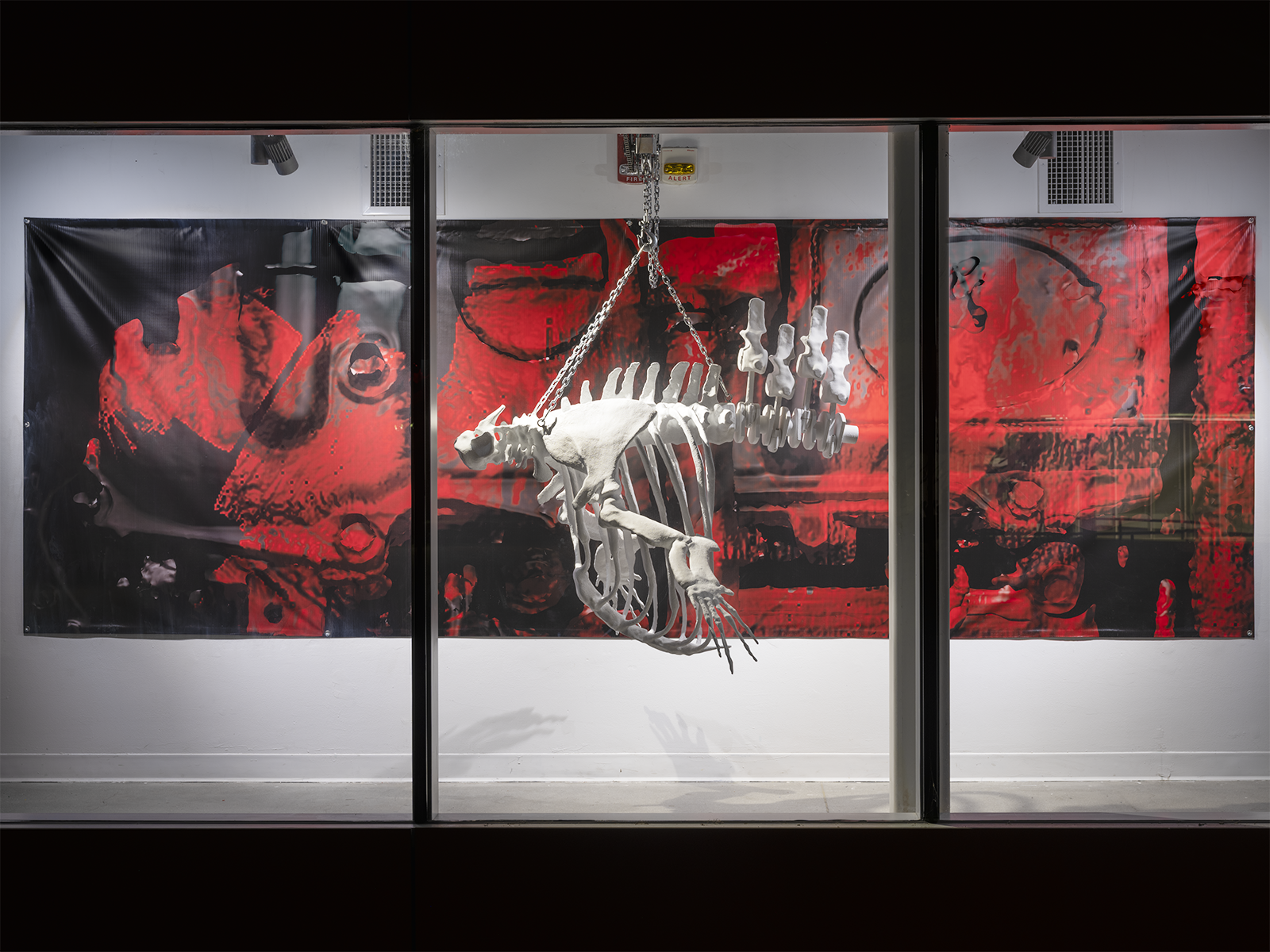
Suspended from the ceiling of the gallery, like a specimen in a natural history museum, is a mechanical whale skeleton. The remains of the Dorudon Atrox, a creature that once dominated the prehistoric oceans, are hoisted like a vehicle under repair. The work hybridizes the vertebrae of the skeleton with the chamber and piston layout of a 4-cylinder engine, aligning fossil structure with the mechanics of combustion. The work does not attempt to revive the whale, but rather maps how the logic of the engine is directly tied to the geological and biological remains it consumes.
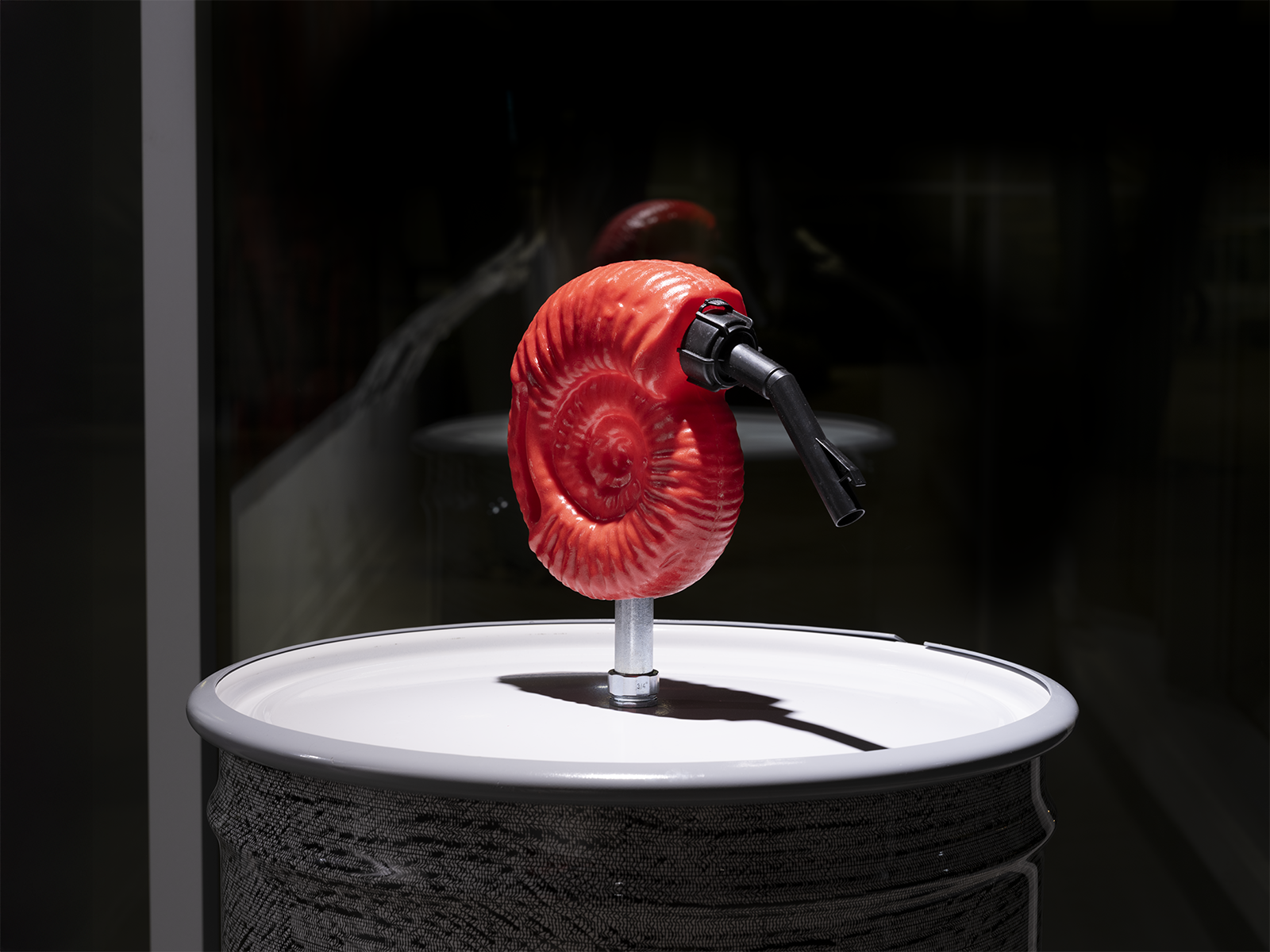
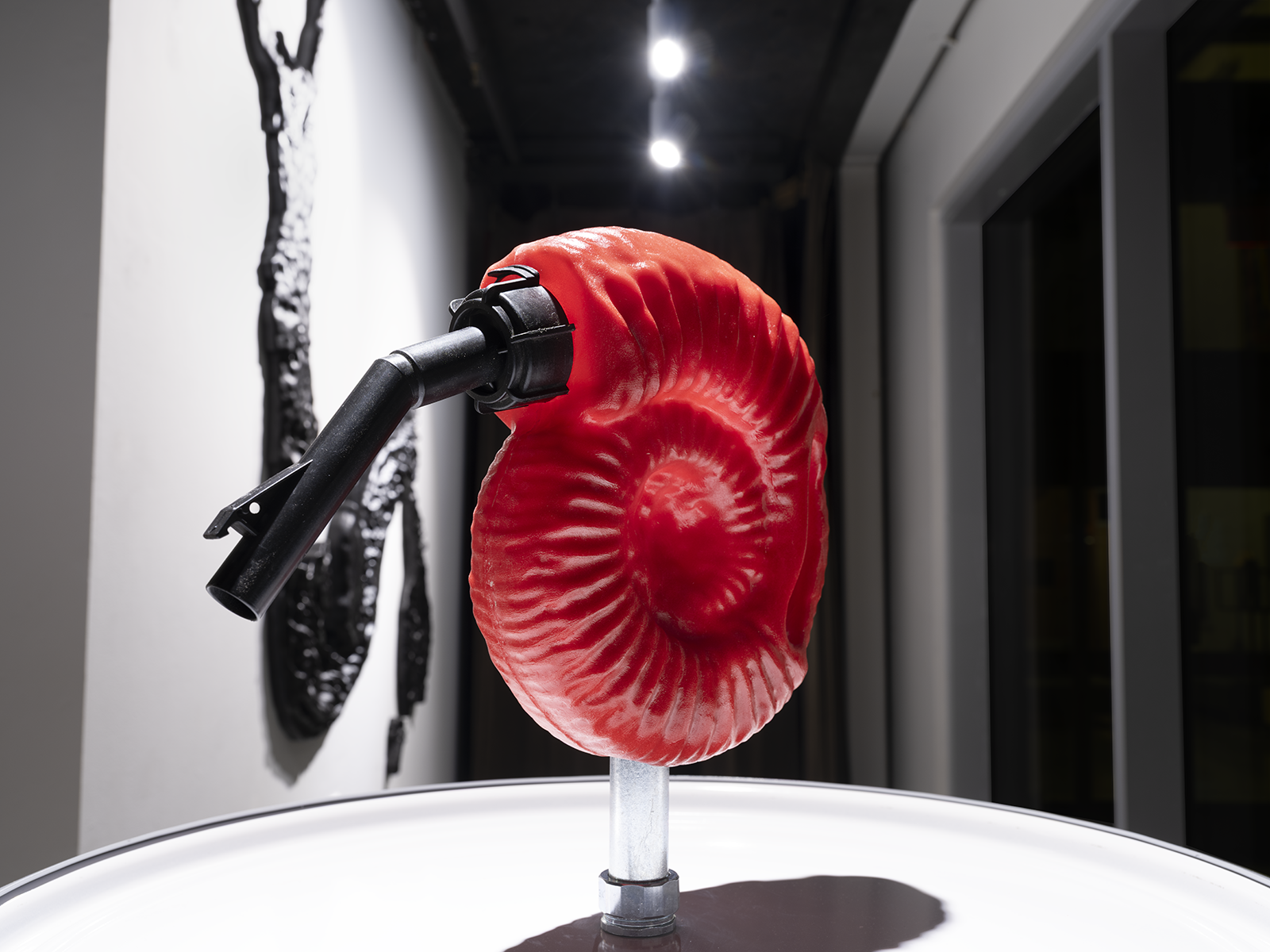
Before petroleum extraction, whale oil served as one of the primary fuels for industrial production. The carcasses of whales were rendered into a commodity to power lamps, factories, and early machinery, turning once-living marine life into an engine for human progress. The transition from whale oil to petroleum did not shift away from using death as fuel; it only exacerbated it. Oil rigs extract crude and natural gases that have been compressed under layers of sediment, transforming organic decay into energy. Pipelines, refineries, and gas stations extend this logic. Our engines burn what once swam, grew, and breathed.
Mar. 22 - April. 04, 2026
Cerritos College Art Gallery | Norwalk, CA
Documentation:
Photo: Yubo Dong | ofstudio